Written by: Karim Hammam
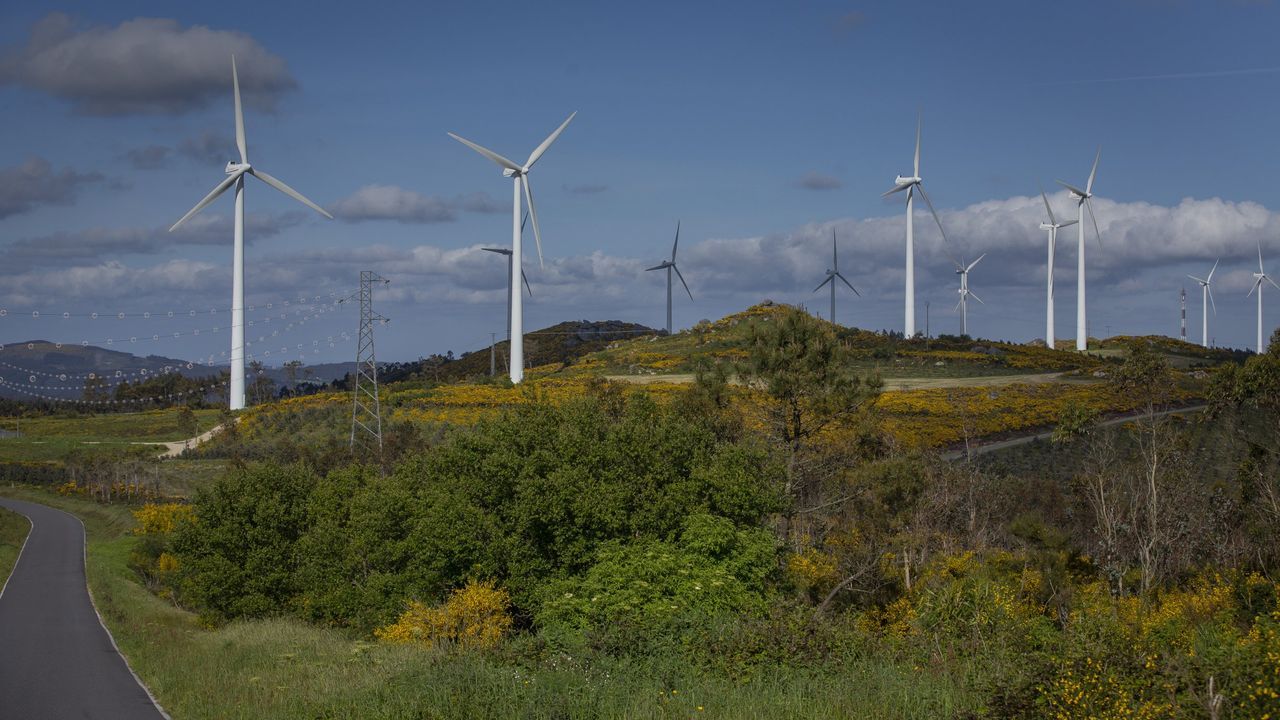
Wind turbines are scattered across high-altitude areas with few obstacles in Galicia, northwest Spain, where these giant machines work to convert wind movement into electricity that reaches homes. Renewable project development experts at Naturgy explain the working mechanism of these turbines and their components in detail.
Basic Turbine Components
The structure begins underground, where the concrete foundation is located, which bears the weight of the tower and the wind forces acting upon it. Above it rises the tower, which provides the turbine with the necessary height and carries the most important part: the nacelle, which houses the conversion system.
At the rear of the nacelle, there is a wind vane (vane) to measure wind direction, an anemometer to determine wind speed, and an automatic steering system that automatically directs the turbine toward the prevailing wind direction.
The Mechanism of Converting Wind to Electricity
When the wind speed is appropriate, the three blades begin to rotate at a speed of 20 to 25 revolutions per minute, and the main shaft transfers this movement to the gearbox (multiplier) which increases the speed to 1500 revolutions per minute.
At the end of the chain is the generator, which converts mechanical energy into electrical energy; then, electrical cables transport the energy through an underground path from the foundation to a substation that connects it to the residential distribution network.
Safety and Control Systems
Turbines stop automatically during storms or very high wind speeds to protect the equipment, and there is also a braking system called a coggenit (brake) that stabilizes the blades when maintenance is needed or in emergencies. Experts emphasize that site design takes into account minimizing the environmental impact on the surroundings as much as possible.