Written by: Salma El Sakka
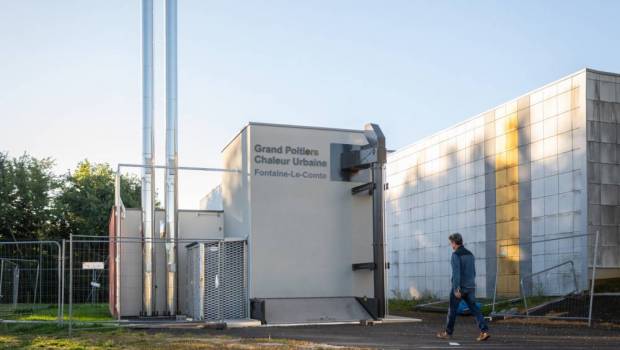
The Grand Poitiers urban community and the company Engie have officially inaugurated three biomass-powered heating networks in the municipalities of Fontaines-le-Comte, Minauc-Poivre, and Saint-Julien-Lar, as part of the community's strategy to accelerate energy transition and decarbonize its territory.
Project Details and Infrastructure
In 2024, Engie was tasked with the design, construction, operation, and maintenance of this infrastructure under a comprehensive energy performance contract. The total length of the underground networks is two kilometers, supplying heat to municipal buildings, schools, sports facilities, and elderly care homes.
The three biomass plants are fed with wood sourced from within a radius of less than 50 kilometers, ensuring an annual production exceeding 2,400 MWh of renewable heat. The biomass coverage rate reaches 85-90% depending on the sites, while a backup gas-powered system secures the remaining portion. The project contributes to avoiding 507 tons of carbon dioxide emissions annually.
Institutional and Regional Support
The project receives financial support from the Agency for Ecological Transition (ADEME), the European Regional Development Fund (ERDF), the European Union, and the Nouvelle-Aquitaine region, aligning with the regional goal of doubling renewable energy production by 2035.
Laurent Bouchard from Engie confirmed that heating networks represent a suitable solution for medium-sized municipalities. For his part, Anthony Proteau, President of Grand Poitiers, emphasized that these facilities enhance a sustainable local public energy service. Meanwhile, Guillaume Rio from the Nouvelle-Aquitaine region highlighted the stability of costs and the reduction of dependence on imported fossil fuels.