Written by: Islam Al-Saqqa
Chinese solar energy projects are causing a radical transformation in traditional lifestyles on the Tibetan Plateau, after providing some herders with new opportunities to increase their incomes and facilitate their daily work, but in contrast, they have raised concerns regarding the impact of the expansion of renewable energy infrastructure on open pastures and the livelihoods that local communities have relied on for thousands of years.
A Shared Model for Production and Grazing
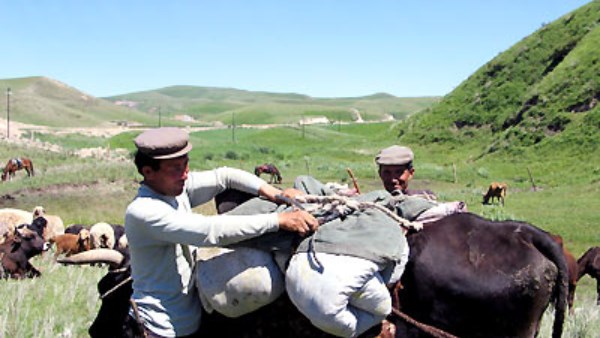
According to a Reuters report, some herders have begun to benefit from being allowed to graze their sheep inside fenced solar energy complexes, in a model that combines electricity production with the utilization of land for livestock farming. Li Yonglin, 25, one of the herders at a solar complex in Gunghe County, Qinghai Province, northwest China, said that the project has made the grazing process much easier, explaining that he no longer needs to monitor the sheep all day; he opens the barn gate in the morning for them to go out to the pasture, and they return in the evening, limiting his role to bringing them into the barn.
Li added that this method has contributed to raising his annual income to between 50,000 and 60,000 yuan, compared to about 10,000 to 20,000 yuan he used to earn using traditional grazing methods. Chinese state media reported that 6,330 families in five towns in the Hainan region have benefited, as of last July, from 56 designated grazing sites, without disclosing the number of families that actually obtained access to those pastures.
Economic Gains Facing the Decline of Traditional Patterns
These experiences indicate that solar energy projects spread across vast areas of the Qinghai-Tibet Plateau can provide additional income sources for some residents, but researchers warn of their social and environmental repercussions, and the changes they may cause in the traditional lifestyles of pastoral communities. The Tibetan Plateau is known as the "Roof of the World," and nomadic communities there have relied on livestock grazing for thousands of years. Studies indicate that the region possesses nearly half of China's solar energy potential, making it a key focus in Beijing's plans to expand renewable energy sources and diversify the energy mix.
Last July, solar power surpassed coal to become the largest source of installed electricity generation capacity in China, while authorities aim to increase solar and wind power capacities by an additional 53% over the next five years. Cao Jun, a safety supervisor at a project belonging to the State Power Investment Corporation (SPIC) in Hainan Province, said that the complex, which extends over an area of 148,000 acres, equivalent to about 60,000 hectares, relies on sheep to graze grass within the site, which reduces vegetation removal and maintenance costs. He explained, in statements to Reuters, that this model achieves mutual benefit, as it allows for the use of sheep in land maintenance, coinciding with the generation of electricity and its transmission to different regions in China, including the capital Beijing and the city of Shanghai.
Concerns Over Pasture Fragmentation and Marginalization of Herders
Despite the economic gains this model provides to some residents, the integration of livestock farming with solar energy projects does not enjoy universal acceptance, as researchers believe that the expansion of these projects is reshaping life on the plateau in a way that may threaten traditional ways of living. These transformations come following policies followed by the Chinese government since the early 2000s, which included the resettlement of thousands of Tibetan nomads into rural towns, as part of efforts that authorities said aim to reduce environmental degradation.
Tsering Dorje, a researcher from the Tibet Policy Institute in Dharamsala, India, said that the spaces available for grazing around solar panels may not be sufficient to ensure the sustainability of the livelihoods of nomads and herders. For his part, another researcher studying environmental conservation and new energy infrastructure issues in the region pointed to the limited participation of local residents in decisions related to converting pastures into solar energy projects, explaining that these facilities lead to the fragmentation of grazing areas that were previously open. The researcher, who preferred to remain anonymous to protect his collaborators, added that dividing pastures into fenced and separate areas increases the difficulty of tracking livestock herds and poses additional challenges for herders, despite the new economic opportunities provided by some projects.