Written by: Salma El-Sakka
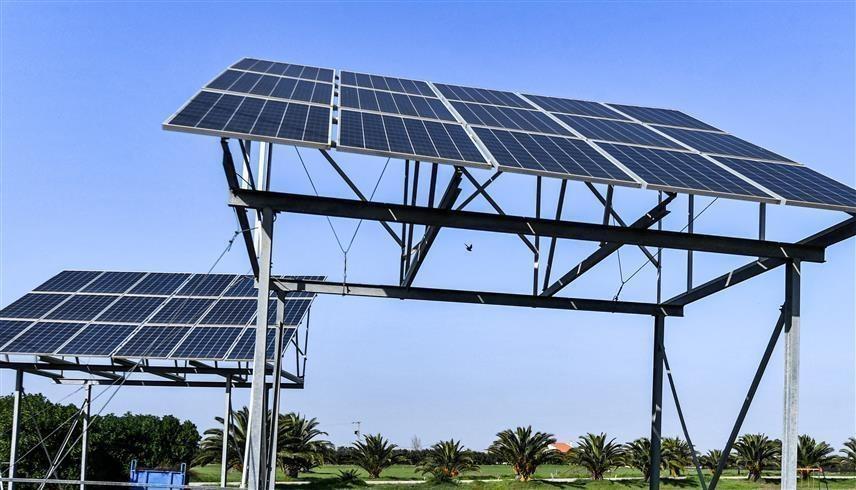
Tunisia is relying on adding about 1,600 megawatts of renewable energy to enhance its electricity security and reduce its dependence on natural gas, following a summer that witnessed frequent power outages that affected citizens' lives and business operations, amid additional pressures on public finances due to the high energy import bill. Tunisia aims to raise the share of renewable energy in the electricity mix to 16% in 2027, compared to a targeted 12% during the current year, reaching 35% by 2030, as part of a plan targeting the reduction of the supply crisis and the diversification of production sources.
A gap between supply and demand in the summer
Expert estimates reveal a clear imbalance in the electrical balance during peak periods, as the available production capacity was estimated at about 4,500 megawatts, against a demand of nearly 6,000 megawatts during the summer peak, indicating an estimated gap of 1,500 megawatts equivalent to 25% of demand. The gap indicates that the problem is not only related to high consumption, but to the aging of some production units, the need for station maintenance, network development, and increasing storage capacities.
New projects to enhance capacities
The government plan includes offering projects with a capacity of 1,100 megawatts to international investors under concession and licensing systems, and allocating 500 megawatts for self-production, allowing institutions and individuals to generate part of their electricity needs. The projects include a 300-megawatt solar plant in Kebili equipped with storage batteries, a 198-megawatt project in Al-Khanabna, a 77-megawatt wind farm, alongside other projects with a capacity of 515 megawatts, while the budget document did not specify the operation date for all announced capacities.
Repercussions of gas reliance and financial deficit
Tunisia faces an economic challenge represented by its heavy reliance on natural gas, as gas accounted for 90.8% of electricity production by the end of July 2026 despite a 61% increase in renewable energy production. This resulted in a 29% rise in the energy trade deficit during the first seven months of the current year to reach 8.27 billion dinars, compared to 6.4 billion dinars a year ago, which increases the burdens of the general budget.
Government plan for urgent solutions
In an attempt to avoid a recurrence of the outages witnessed by the country during the summer as a result of high temperatures and increased use of air conditioning units, the Prime Minister's office announced an urgent plan that includes adding a battery system with a capacity of 300 megawatts and a storage capacity of 600 megawatt-hours, installing gas engines with a capacity of 200 megawatts, a 300-megawatt turbine, and recovering 190 megawatts from existing station capacities. The government also aims to integrate about 300 megawatts of renewable energy before the summer of 2027, reduce peak demand by 300 megawatts, alongside updating the network and improving consumption efficiency, amid a bet on the speed of implementation and the network's ability to absorb new production.