Written by: Suhaib Shams
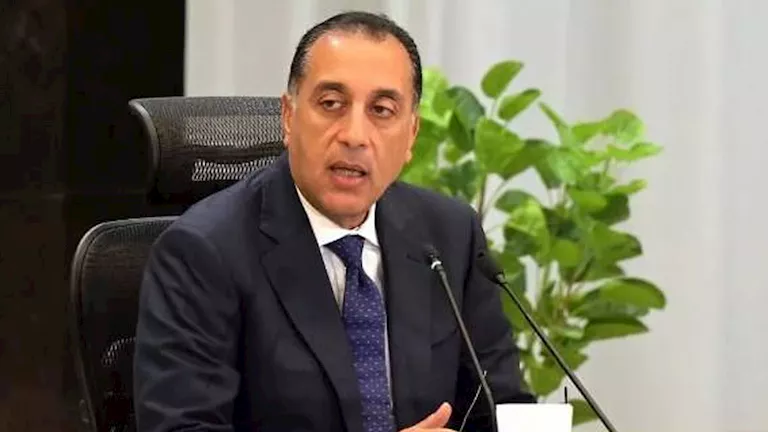
Dr. Moustafa Madbouly, Prime Minister, revealed the challenges facing the state in light of global petroleum prices reaching $110 per barrel, explaining that this increase puts the government before three main paths that require a delicate balance between protecting citizens and maintaining the stability of the national economy.
Three options to face rising costs
The Prime Minister explained that the first option is to burden citizens with the full increase in costs, an approach followed by many countries economically. As for the second option, it is based on the state bearing this increase in full, which requires the availability of huge financial resources, or resorting to borrowing to cover the price differences.
Regarding borrowing, Madbouly pointed out that it represents an additional burden given the resulting due interest that increases the volume of public debt and future financial commitments, warning that borrowed amounts may double in value within seven years as a result of accumulated interest, which places heavy burdens on future budgets.
Supply challenges and their impact on energy
The Prime Minister stated that the third option is to commit to the financial allocations specified in the budget and purchase quantities of petroleum products according to the new prices in a manner that suits available resources. He explained that this scenario may lead to not fully meeting citizens' needs, as resources may cover only about 50% to 60% of demand, which could cause fuel supply shortages.
He pointed out that this shortage may impose difficult measures, including the possibility of resorting to load shedding for daily periods, in order to avoid the repercussions of the lack of necessary resources to meet continuous energy needs.
Transitioning towards renewable energy and accelerating plans
Within the framework of facing these challenges, Madbouly stressed the importance of increasing the contribution of new and renewable energy in the Egyptian energy mix. He revealed the state's orientation to accelerate targeted plans based on presidential directives, as it was decided to raise the percentage of renewable energy to reach 45% by 2028, instead of the previous target of 42% by 2030, through expansion in solar energy, wind, nuclear energy and battery storage technologies projects.


