Written by: Islam El-Saqqa
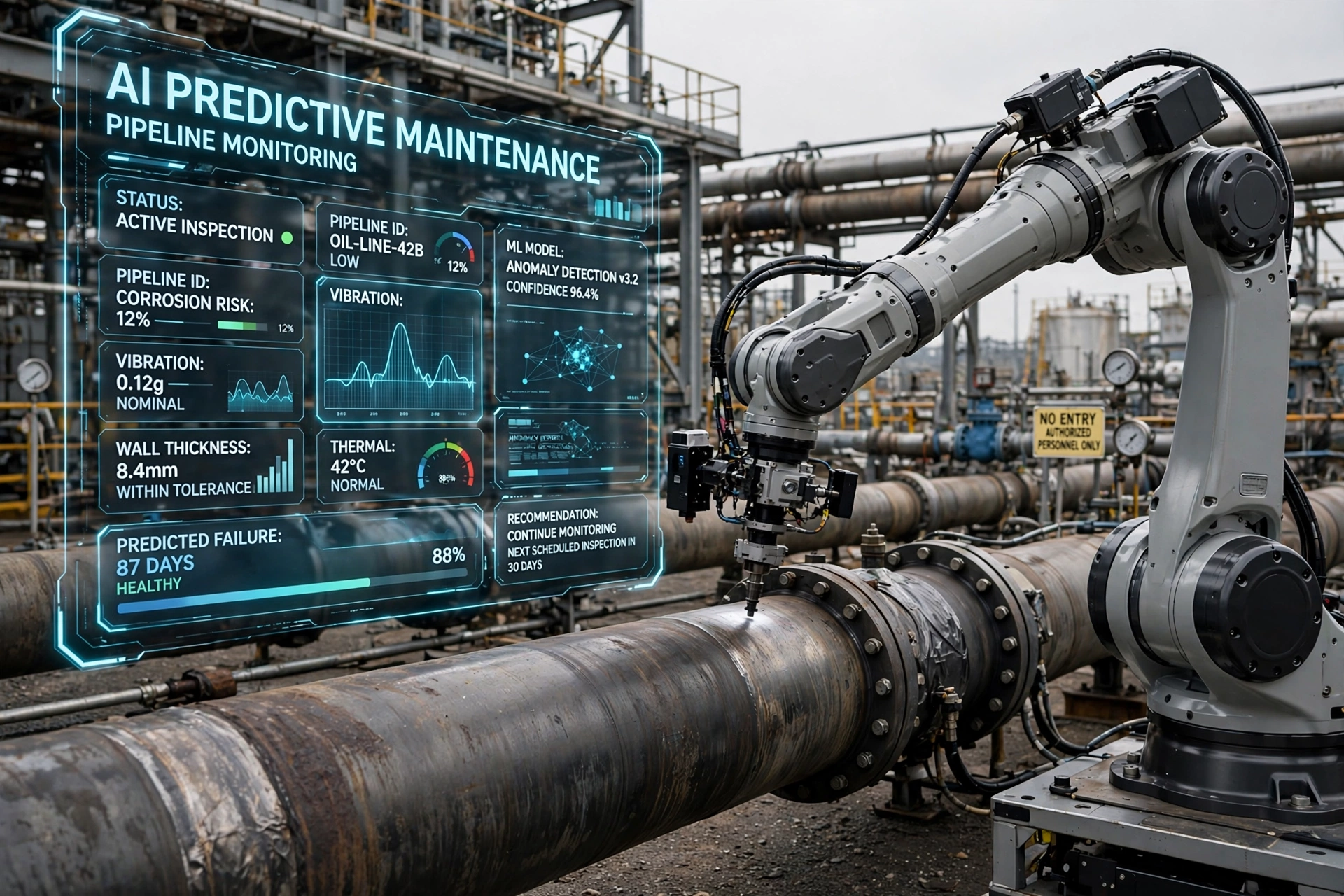
A research team has developed an advanced deep learning model capable of predicting oil well production rates with unprecedented accuracy, thereby overcoming the limitations faced by traditional artificial intelligence models in this sector. This model is called the "Multi-Graph Interaction Learning Network" (MGILN), and it represents a qualitative leap in how established physical laws are integrated with big data analysis to achieve more stable and reliable results.
Modern oil wells rely on thousands of sensors that pump continuous data regarding pressure, temperatures, pump frequencies, and motor currents. The main challenge lies in the fact that wells are complex systems in which electrical, hydraulic, and thermodynamic factors overlap, making it difficult for purely statistical models to accurately predict future production, especially in the presence of data noise, sensor degradation, or changing reservoir conditions over time.
The MGILN model addresses these challenges through an innovative dual-path architecture. The first path focuses on "static physical graphs" derived from engineering expertise and physical laws such as Darcy's equations and Bernoulli's principles. The second path relies on "dynamic similarity graphs" that analyze statistical correlations between data in real time. Through a "mutual attention" mechanism, these two paths are reconciled to ensure that the forecasts do not violate the physical laws of nature, while at the same time not ignoring the complex statistical patterns discovered from field data.
Experimental results published in the journal "Discover Artificial Intelligence" demonstrated the model's ability to reduce the error rate in forecasts to about 20%, compared to more than 52% in traditional models used previously. This development enhances the efficiency of "smart fields", as it allows for the reduction of risks associated with wrong decisions regarding well pumping adjustments or maintenance operations, and it also supports automated control operations in the oil sector, contributing to increased operational returns, especially in light of the increasing complexity of extracting remaining resource operations.