Written by: Suhaib Shams
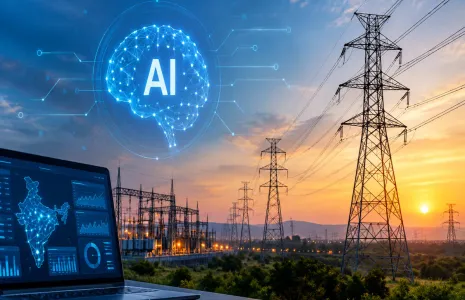
India is preparing to expand the use of artificial intelligence technologies across the electricity sector with the aim of making the power grid more reliable, secure, and flexible, amid the continuous expansion of the renewable energy sector and its associated infrastructure.
The Role of Artificial Intelligence in the Energy Sector
India's Minister of State for Power and New and Renewable Energy, Shripad Yesso Naik, affirmed during an event held in New Delhi that artificial intelligence will play a pivotal role in managing the country's vast transmission network and improving the level of services provided to consumers. The minister's remarks came on the sidelines of the 53rd Foundation Day event of the Central Electricity Authority. He explained that the discussions highlight mechanisms for technologically empowering the electricity sector and the ministry through artificial intelligence, to include the fields of generation, transmission, distribution, renewable energy integration, and technical safety standards.
Modern Technology Applications and Growth Indicators
The move towards using artificial intelligence coincides with India adding new generation capacities, particularly from renewable energy sources. Applications under consideration include demand forecasting, grid operations monitoring, and integrating wind and solar power into the electrical system. The minister pointed out that the government is exploring ways to deploy these technologies to enhance operations and provide better services that keep pace with the changing requirements of the power grid.
In a related context, India's total installed power generation capacity reached approximately 558 gigawatts, of which 308 gigawatts come from non-coal sources, representing about 55 percent of the total. The country had committed to achieving a 50 percent share of installed capacity from non-coal sources by 2030, but successfully achieved this target five years ahead of schedule.
Infrastructure Expansion and Smart Meters
The Indian official explained that future expansion up to 2030 will require supportive infrastructure as the generation mix changes. He added that approximately 77.5 million smart meters have been installed across India, allowing utility companies to understand consumption patterns more effectively and balance generation with demand. At the same time, the transmission network has expanded to reach about 500,000 circuit kilometers, enhancing nationwide electrical connectivity.