Written by: Islam El-Saqqa
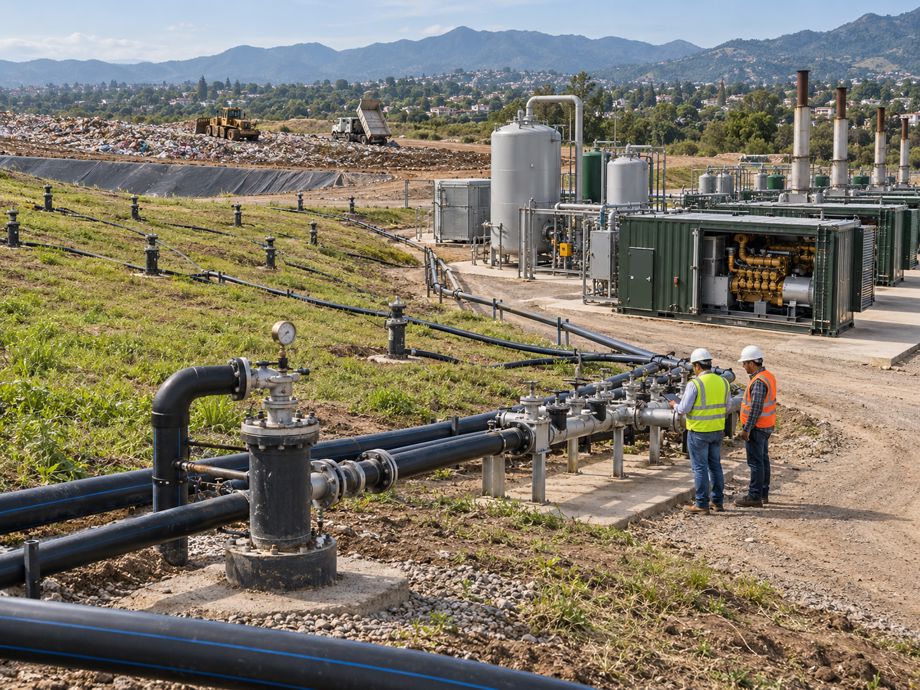
A recent study conducted on the Cuernavaca metropolitan area in Mexico has shown that using methane gas emitted from landfills to generate electricity can reduce the landfill's climate emissions by about 72%, provided that the gas is captured with high efficiency to achieve maximum environmental and economic benefits.
Study Methodology and Production Estimates
The study, published in a specialized journal, examined a proposal to establish a regional landfill serving ten municipalities. The researchers led a team that compared burning captured gas in closed flares with generating electricity, while testing the impact of waste composition, equipment options, electricity prices, and carbon credit rules on the final project results.
The planning scenario assumed ten years of waste disposal between 2024 and 2033, with gas recovery assessed until 2044. Based on environmental assessment models, the expected quantities of methane and electricity were calculated over 21 years, with parameters adjusted to suit local waste composition and the regional climate, which is characterized by faster decomposition of organic waste.
Factors Affecting Climate and Financial Gains
The results indicated that capture efficiency is the most influential factor in the percentage of avoided emissions; electricity generation achieved large-scale reductions in greenhouse gases compared to uncontrolled gas release. Analyses also showed that installing power plants gradually improves the net present value of the project compared to a full pre-installation.
On the financial and economic front, electricity prices and carbon credit revenues play a crucial role in enhancing the project's feasibility and ensuring its continuity. Although gas engines showed strong financial and environmental performance, the success of these projects remains closely linked to the speed of installing capture wells and controlling methane leakage to ensure the achievement of renewable energy and climate action goals.