Written by: Suhaib Shams
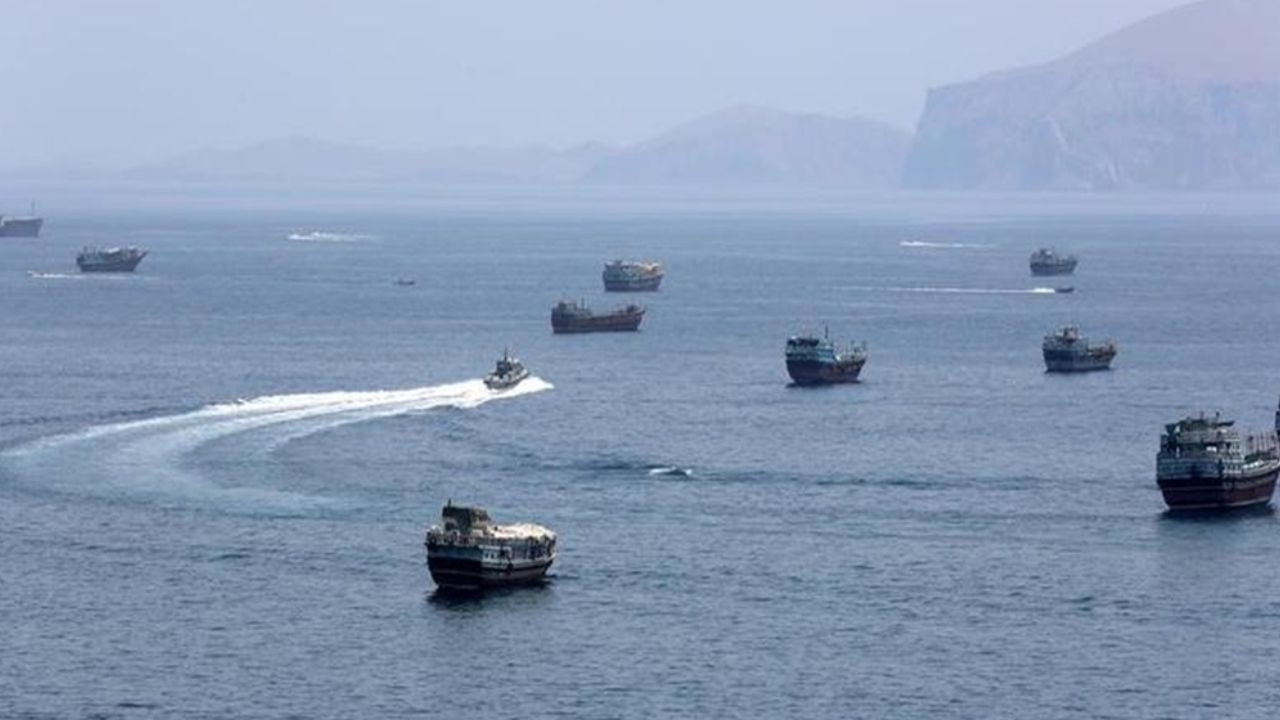
The Iranian Revolutionary Guard Corps announced that an incident occurred involving an oil tanker in the area south of the Strait of Hormuz, where the collision of the tanker with a naval mine led to a fire breaking out on board. This incident comes at a time when the importance of securing global navigation corridors is increasing, especially since the Strait of Hormuz is the most vital artery for global oil and gas trade, through which massive quantities of energy supplies pass daily to international markets.
Incident Details and Security Warnings
According to the issued statement, the Iranian authorities claimed that the tanker in question had turned off all its tracking and navigation systems since its departure, and took an unauthorized route within the strait, in explicit violation of the rules followed in this strategic region. The statement pointed out that this action was the direct reason behind the incident due to the non-compliance with the specified navigational standards.
In the context of enhancing security measures in the region, Iran issued a strong warning to all ships sailing in the waters of the Strait of Hormuz and the Arabian Gulf, emphasizing that it will take resolute measures against any naval vessel that turns off its navigation and identification systems while passing.
These developments raise new concerns regarding the stability of oil tanker traffic and ensuring the flow of supplies through the most sensitive waterway in the world. Global energy markets are watching with intense interest any security tensions in this region, given its pivotal role in determining price stability and ensuring the arrival of supplies to Asian and European markets, as any threat to these corridors is considered a pressing factor on global prices and an increase in marine insurance costs in the region.


