Written by: Fatima Younes
Humanity is facing a race against time to address global warming, as international reports indicate that current efforts to limit greenhouse gas emissions remain below the required level. With climate agreements and discussions continuing without achieving a tangible reduction in emissions, extreme weather phenomena such as unprecedented rises in temperatures, floods, and droughts are intensifying, putting enormous pressure on food and water resources globally.
Warnings of rising global temperatures
The United Nations Environment Programme issued a new warning in its 2026 Emissions Gap Report, stating that the current trajectory could lead to a temperature rise of 2.8 degrees Celsius by the end of this century. Even if all countries fully implement their climate commitments, forecasts suggest the rise could reach 2.6 degrees Celsius, a figure that carries grave risks for economies, environments, and human societies. To stay within the 1.5 degrees Celsius range, it is required to sharply reduce emissions by 18% by 2030, 45% by 2035, and 69% by 2040 compared to 2025 levels.
Climate challenges in Pakistan
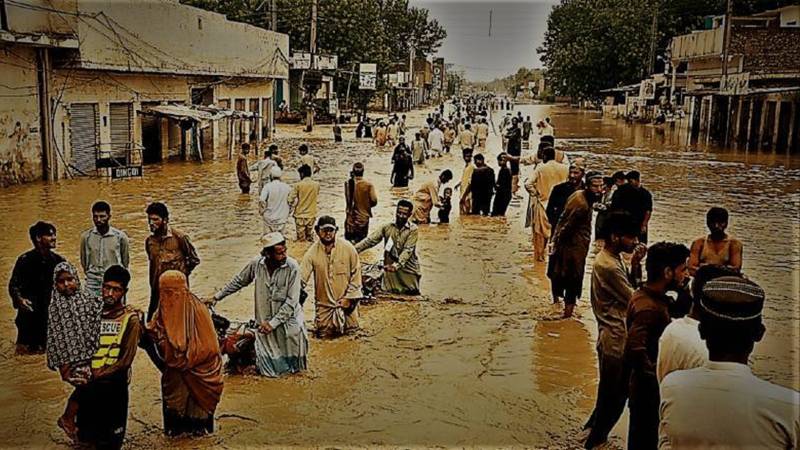
For Pakistan, climate change is not just an international discussion, but a direct threat to water and food security, public health, and infrastructure. The country, which relies heavily on agriculture, faces real risks as a result of changing rainfall patterns, glacier melting, and temperature fluctuations, affecting crops, livestock production, and national income. The floods witnessed by the country in 2022 proved the extent of the vulnerability of infrastructure and communities to increasing natural disasters.
Energy solutions and sustainable transition
Addressing this crisis in Pakistan requires accelerating the transition toward renewable energy, such as solar and wind power, to reduce reliance on imported fossil fuels. The importance of energy efficiency and the use of modern technologies, such as artificial intelligence and digital monitoring, is also emerging to improve energy consumption management in industries and transport. In parallel with these local efforts, developed countries bear a major responsibility to provide financial and technological support to developing countries to enhance their ability to adapt to accelerating climate changes.