Written by: Fatima Younes
A recent report by the French Environment and Energy Management Agency (Ademe) has revealed significant economic and environmental advantages of electric vehicles compared to traditional cars. The report explains that households replacing old diesel vehicles with new electric ones can reduce their monthly energy expenditure by three times, noting that the cost of electric charging is 2.5 to 3 times lower than the cost of fossil fuels, depending on the reliance on public charging stations.
Balancing maintenance and insurance costs
Despite significant savings in energy costs, the report pointed out a variation in other expense categories. While maintenance costs decrease by up to 40% due to fewer moving parts and the lack of a need for oil changes, insurance costs increase by an average of 11% compared to internal combustion vehicles, due to higher repair costs and the complexity of repair operations in some models.
Purchase price gap and market trends
The initial purchase price remains the biggest challenge, as data shows the price gap between electric and internal combustion vehicles varies by vehicle class; the difference is less than 3,000 euros for compact cars, about 5,200 euros for city cars, while it exceeds 7,000 euros for small urban cars. Nevertheless, a growing trend toward acquiring electric vehicles has been observed among low-income households, which accounted for 41% of new electric vehicle sales in 2024.
Battery sustainability and environmental impact
The report refuted concerns regarding battery longevity, as data showed that battery capacity degradation ranges between 1.7% and 2.3% annually, maintaining an average capacity of 89% after covering 200,000 kilometers. Environmentally, electric vehicles record a carbon footprint at least 50% lower over their lifecycle compared to internal combustion engines, as the "carbon debt" resulting from battery manufacturing is offset after traveling approximately 70,000 kilometers.
Charging infrastructure development
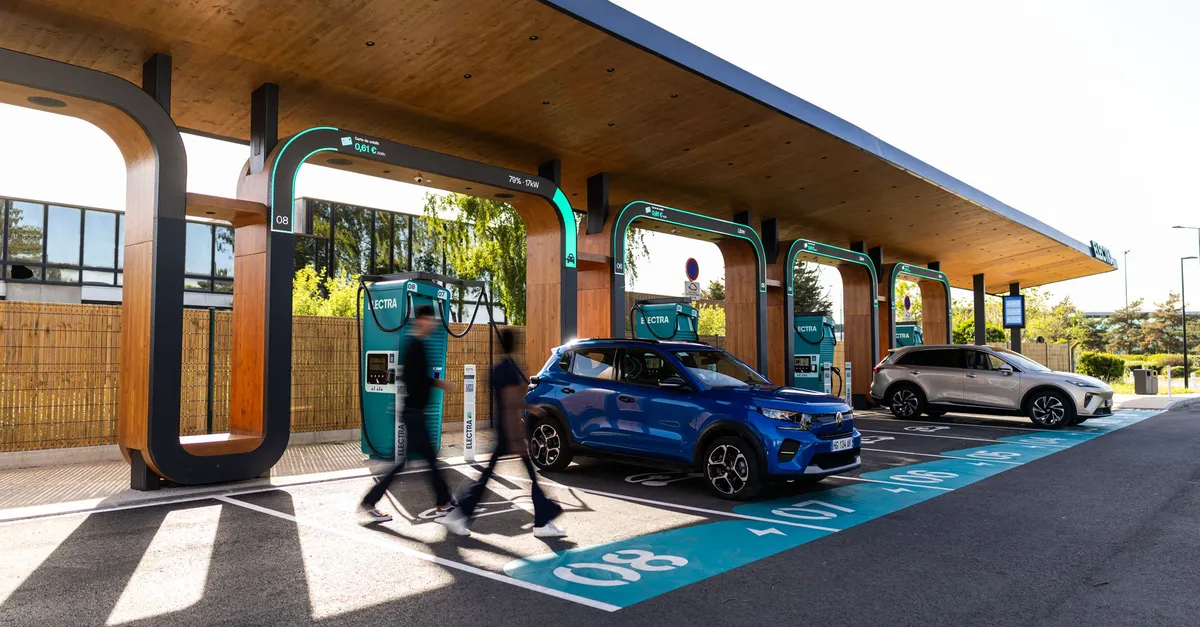
Charging infrastructure has witnessed remarkable development, with the number of public charging points in France exceeding 200,000 by mid-2026. Despite this expansion, the report emphasized the importance of clarity in charging prices at public stations to facilitate financial planning for users, especially given the difference in costs between home charging and fast charging in public networks.