By: Ahmed Abdel Salam
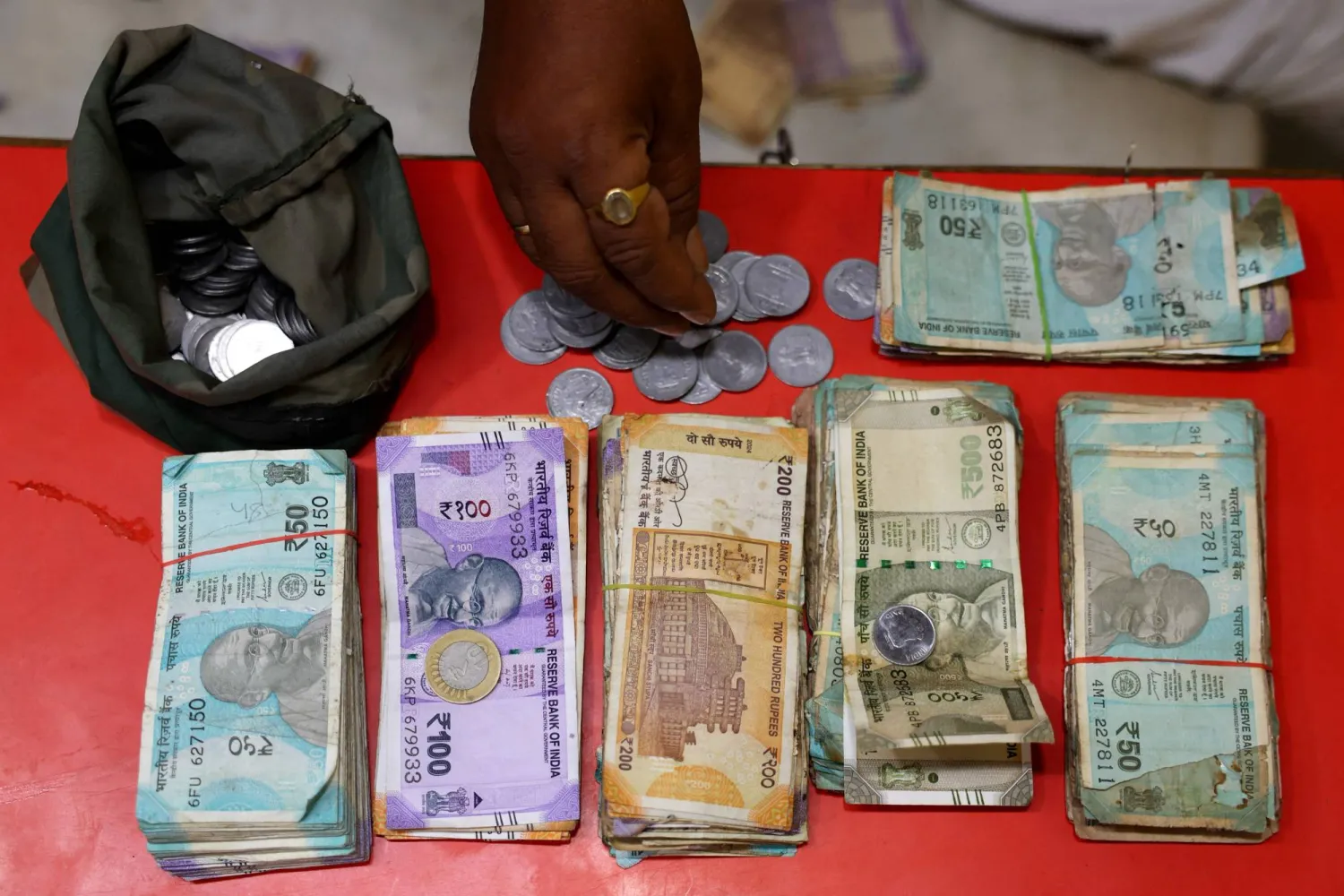
The Indian rupee witnessed positive movements in currency markets, succeeding in registering an increase in its value against the US dollar, despite the significant pressures imposed by global crude oil price fluctuations. This performance comes at a time when the Indian economy relies heavily on energy imports, making the local currency highly sensitive to changes in oil barrel prices, which directly affect the trade balance and import costs.
Economic data indicates that the support provided by the central bank was the main driver for this stability and recovery. The monetary institution took proactive measures to absorb shocks resulting from rising energy bills, reflecting the bank's strategy to maintain financial market stability and prevent sharp fluctuations that could harm domestic inflation or affect foreign investor confidence.
This step is part of broader efforts by central banks in emerging economies to face external challenges, especially with fluctuating global fuel prices. When the cost of oil rises, the need for hard currency increases to cover the import bill, putting selling pressure on the local currency. Through calculated intervention, providing necessary liquidity, or managing foreign exchange reserves, the central bank succeeded in creating a state of balance that enabled the rupee to recover part of its strength.
Economic experts confirm that this support is not limited to the monetary side alone, but sends a reassuring message to the markets that there is strong and effective management of macroeconomic risks. These policies are expected to continue amid ongoing uncertainty in global energy markets, as coordination between fiscal and monetary policy remains vital to preserve economic growth gains and ensure national currency stability in the face of external factors.


