Written by: Salma El-Sakka
A research team from LONGi, the leading Chinese solar cell manufacturer, has conducted an in-depth and advanced study on the physical mechanisms behind edge masking technology in high-efficiency solar cells. The researchers concluded that this technology effectively contributes to suppressing edge recombination losses by restricting the lateral transport of charge carriers, which contributes to a more accurate understanding of cell performance.
Edge Masking Mechanisms and Loss Reduction
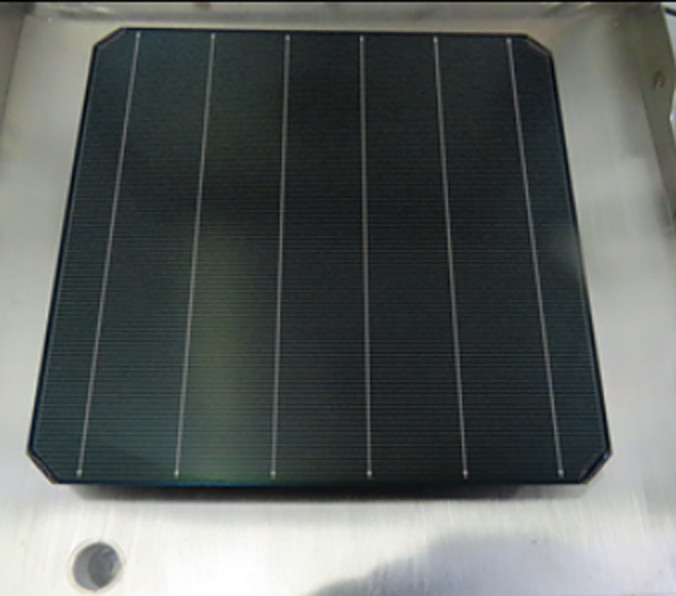
LONGi researcher Jinshun Wang explained that edge masking technology is essentially a laboratory measurement tool in which the periphery of the solar cell is covered with an opaque material to prevent light from reaching its edges. He noted that this process reduces recombination losses and potentially increases the measured conversion efficiency. In previous studies on back-contact cells, it was found that the wafer edge represents a major channel for current loss, and masking it during measurement tests noticeably raises the measured efficiency compared to the total area.
Results and Laboratory Applications of the Technology
The study, published in a specialized journal, indicated that the masking process creates a dark, electrically resistive region, which restricts the movement of charge carriers toward the physical periphery of the cell. Experiments showed that the optimal masking width is about 5 mm, while wider ones led to a decline in efficiency due to the expansion of the inactive area and associated electrical losses. The researchers emphasized that this approach is specifically designed for laboratory characterization processes rather than commercial manufacturing, as selective metal placement may add manufacturing complexities and the masked area does not generate energy, but it remains a reliable tool to evaluate other loss factors more accurately.