Written by: Karim Hammam
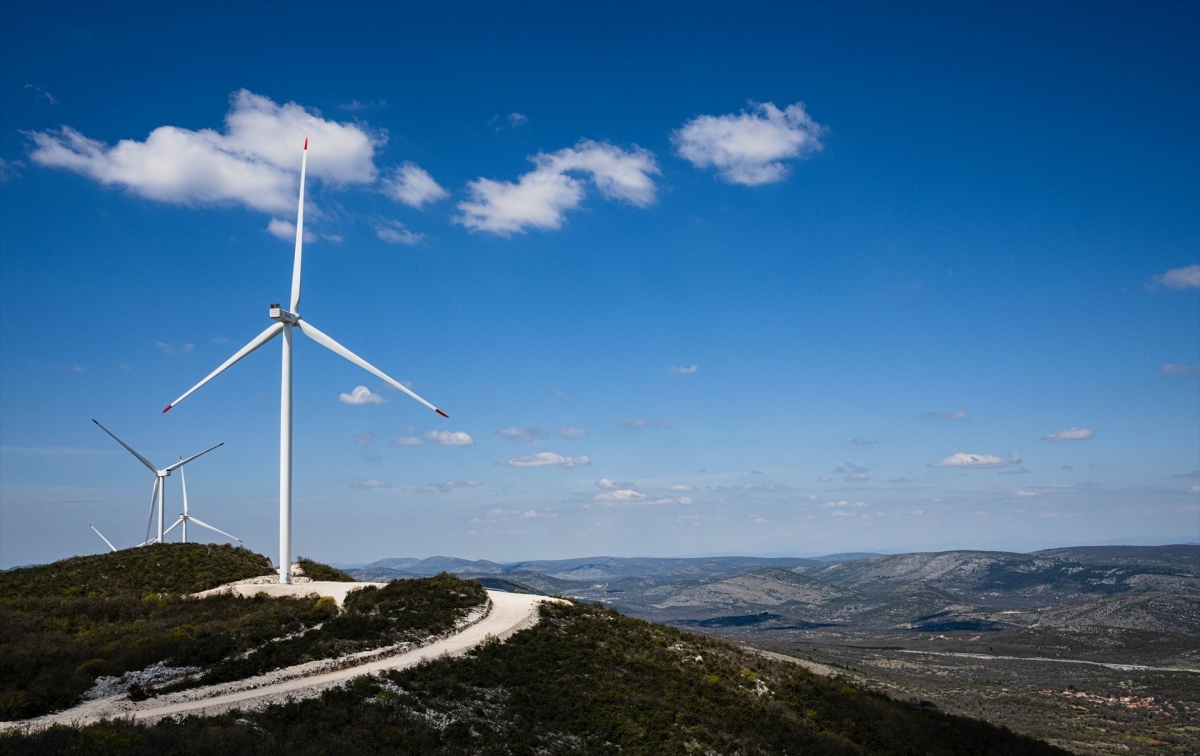
Acciona Energía announced the official start of commercial operations at the "Opor" and "Boraja 2" wind power plants in Croatia, as part of the company's strategy aimed at expanding its portfolio of assets in the renewable energy sector in Europe. This project adds a total production capacity of 72 megawatts to the Croatian national electricity grid, with the "Opor" plant located in the Split-Dalmatia region contributing about 27 megawatts, while the "Boraja 2" plant in the Šibenik-Knin region provides about 45 megawatts.
Technology and Technical Specifications
The new plants rely on advanced wind turbines produced by the German company "Nordex", as each was equipped with 4.5 MW turbines mounted on 105-meter-high steel towers. This advanced infrastructure aims to maximize the utilization of wind speed in the selected areas, to ensure sustainable supply to the national grid through the Croatian energy market operator "Hrote".
Environmental and Economic Impact
Construction work contributed to providing nearly 400 job opportunities during the peak implementation of the project, reflecting the local economic impact of these investments. The two plants are expected to jointly produce about 203 GWh of clean electricity annually, which directly enhances Croatia's contribution to its carbon emission reduction targets, as the project is estimated to help avoid the emission of up to 135,000 tons of carbon dioxide annually.
Expansion Strategy in Croatia
This step consolidates the company's position in the Croatian market, where it has been operating the "Jelinak" wind power plant with a capacity of 30 MW since 2013. With the addition of the new projects, Acciona Energía's total installed capacity in the country reaches 102 megawatts. The company's ambitions do not stop here, as it is currently continuing construction work on the "Promina" photovoltaic power plant with a capacity of 189 MW, reflecting the company's commitment to diversifying clean energy sources and supporting the energy transition in the region through long-term supply contracts supported by government programs approved by the European Commission.