Written by: Suhaib Shams
President Abdel Fattah El-Sisi emphasized that the Egyptian state continues to bear the largest portion of the real cost of energy provided to citizens, in light of challenges related to rising prices in global markets, stressing the importance of societal awareness regarding the nature of this strategic sector and its ongoing challenges.
Egypt Forum 2026 and Energy Sector Prospects
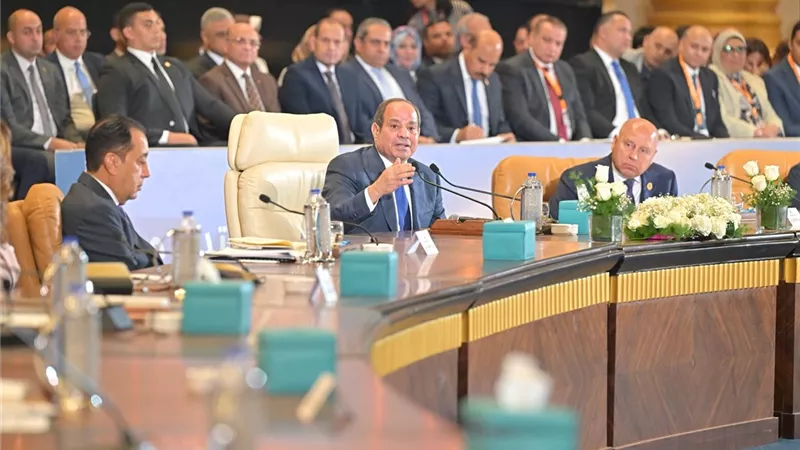
The President's remarks came during his participation in a panel discussion titled "The Journey of Egyptian Energy: National Achievements and Future Prospects," as part of the fourth-day activities of the Egypt Forum 2026. The session addressed the dimensions and future of the energy sector in the country and the efforts exerted to enhance infrastructure and attract investments.
High-Level Attendance for the Energy Sector
The panel discussion witnessed the attendance and participation of a number of senior officials and experts, led by Prime Minister Dr. Mostafa Madbouly, Minister of Finance Ahmed Kouchouk, Minister of Electricity and Renewable Energy Dr. Mahmoud Esmat, and Minister of Petroleum and Mineral Resources Engineer Karim Badawi. It also included an elite group of energy sector experts, including the former Chairman of the Egyptian Natural Gas Holding Company (EGAS), Engineer Mohamed Shoeib, the Chairman of TAQA and Vice Chairman of the International Gas Union, Engineer Khaled Abu Bakr, and Dr. Moataz Bellah Soliman, professor at the Institute of Graduate Studies and Research at Alexandria University.
Challenges of Investment in the Energy Sector
President El-Sisi pointed out the temporal and economic dimensions of major projects in the energy sector, explaining that biddings related to higher prices in this field typically require a period ranging between five to seven years to begin bearing fruit and achieving the desired returns. This reflects the nature of long-term investments required by this vital sector to ensure the sustainability of supplies and meet the developmental and economic needs of the state across various future pathways.