Written by: Fatima Younis
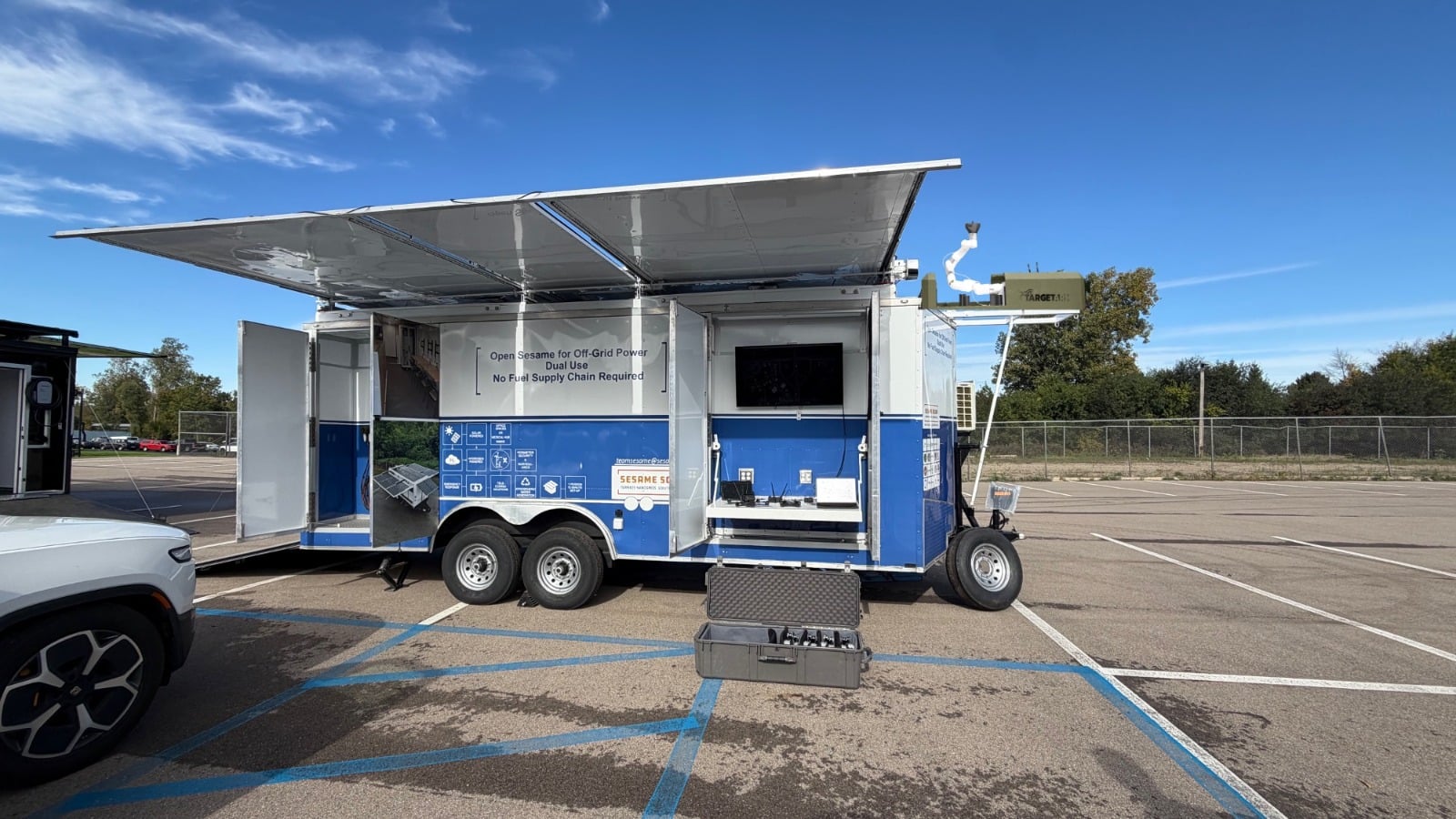
An advanced technical system dedicated to the autonomous charging and launching of unmanned aerial vehicles has been unveiled, relying on a mobile electrical grid powered by renewable energy, representing a qualitative shift in military uses and fields dependent on drones.
Components of the Integrated System
The new system consists of three essential elements integrated by US companies to ensure seamless operation; they include a renewable energy power source, a robotic arm dedicated to launching and receiving drones, alongside the drone itself. This innovation aims to replace traditional fuel and solve the problems of supplying drones with power, with the capability of remote control and monitoring.
Technical Cooperation Between Companies
The development of this system came through cooperation between three specialized US companies: Sesame Solar, specializing in renewable energy technologies; Target Arm, a leader in robotics and artificial intelligence; and AG3 Lab, specializing in defense and aviation technologies. This system has been named the "Persistent Drone Operation Nanogrid".
Technologies Used in Operation
The system relies on a mobile microgrid that can include between 2 and 12 ready-to-operate grids for power and battery charging. The robotic arm known as "Ralar", developed by Target Arm, handles automated launching and recovery tasks without direct human intervention on-site. The "SPADE" aircraft, produced by AG3 Lab, acts as a third flexible element to adapt to various missions.
Supporting Local Production and Military Security
The launch of this system aligns with US trends to boost local drone production and reduce reliance on imports. This technical solution seeks to secure supply chains and provide independent solutions for safely charging and launching drones, ensuring the efficiency of military and exploratory operations without endangering lives or revealing locations.