Written by: Salma El-Sakka
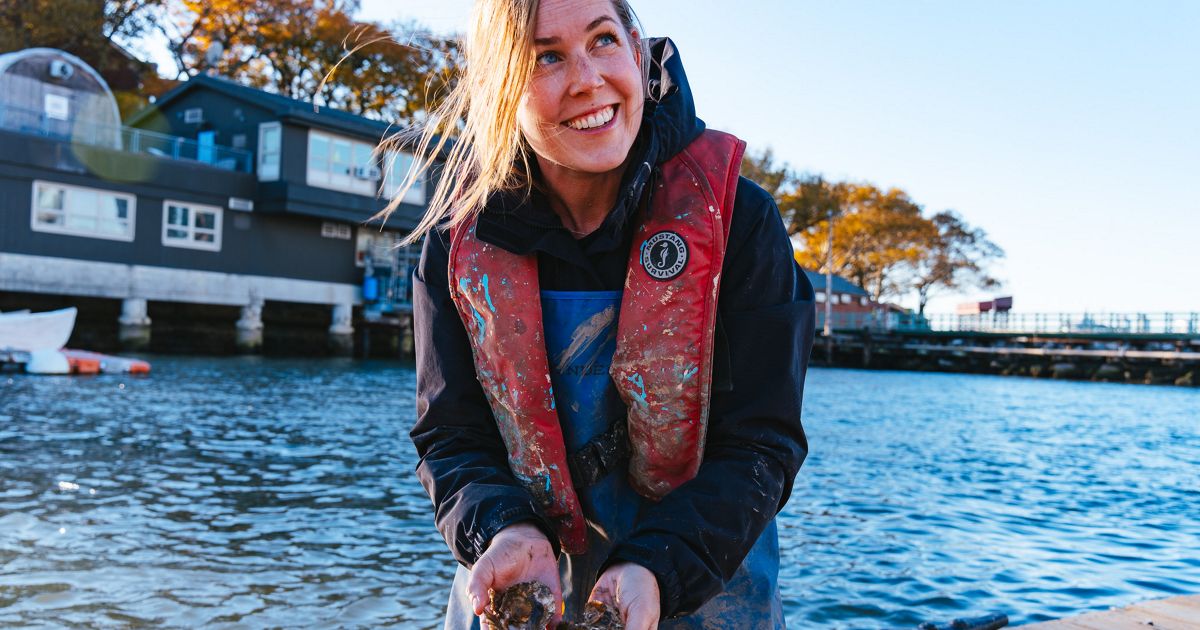
Caroline Khoury, Restoration Operations Manager at the Oyster Restoration Project, is leading pioneering environmental efforts to restore the ecosystem in complex urban ports, specifically in New York Harbor, which is one of the busiest commercial centers in the world, as part of global efforts to enhance climate resilience and protect coastlines.
Restoring Ecological Balance in Busy Ports
Khoury, who has a multidisciplinary background in restoration ecology and conservation planning, is leading one of the most unusual conservation initiatives in major cities. Although most reef and aquatic habitat restoration projects are usually concentrated in remote areas far from ports, New York Harbor presents an exceptional challenge due to a long history of dredging, industrial pollution, and altered shoreline features.
Environmental data for the project indicate that the absence of natural oyster reefs leads to the destabilization of wetlands and coastal habitats. These organisms play a vital role as ecological engineers, with a single oyster contributing to water purification at significant rates daily, in addition to supporting shoreline stability, creating a favorable environment for biodiversity growth, and forming an interconnected network of natural habitats.
Ambitious Goals and Modern Techniques for Coastal Restoration
The ambitious project aims to return one billion oysters to New York Harbor by 2030 to achieve a sustainable and measurable impact on the marine ecosystem. After the team succeeded in increasing its operational capacity to restore tens of millions of oysters annually, plans are underway to expand operations using specialized platforms that allow oyster larvae to be released directly into the water rather than using traditional methods.
The team's efforts confirm that choosing New York Harbor specifically to implement this experiment stems from the organizers' desire to face the most difficult urban environmental conditions. If restoration strategies succeed in one of the most damaged and crowded coastlines in the world, it will pave the way for applying successful and similar models in other coastal cities around the planet facing similar environmental challenges.