Written by: Ahmed Abdel Salam
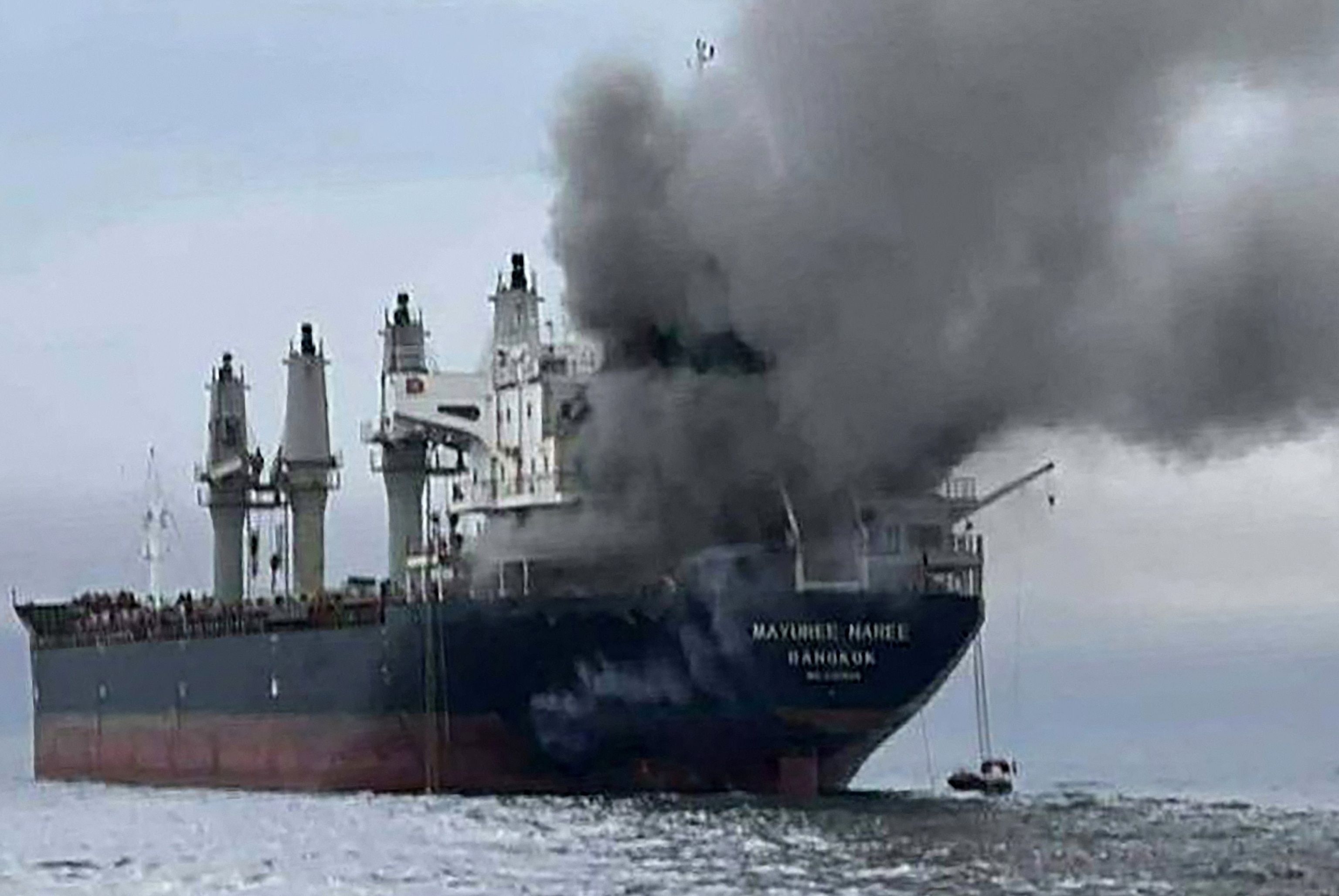
The Iranian Revolutionary Guard announced that an oil tanker was involved in an explosion resulting from a collision with a naval mine in the southern part of the strategic Strait of Hormuz, which led to a fire breaking out on board while it was attempting to leave the vital waterway.
Details of the incident and directed accusations
Official data indicated that the explosion targeted the ship's engine room. Naval forces accused the tanker of violating maritime regulations governing traffic through the strait, noting that the ship had turned off all location and navigation systems since the beginning of its journey and attempted to use an unauthorized southern route.
Following the incident, military authorities issued strict warnings to vessels operating in the Strait of Hormuz and the Gulf region, confirming that any naval vessels sailing with their navigation and identification systems turned off will face a firm and strict response. To date, no official details have been provided regarding the identity of the targeted tanker, the extent of the material damage, or potential human casualties resulting from the explosion.
A series of incidents in the vital corridor
This incident comes within a series of similar occurrences recently witnessed in the waterway, where scattered incidents involving giant oil tankers were recorded that were subjected to naval mine explosions while attempting to cross the strait via unauthorized paths, reflecting the escalating risks and challenges facing maritime shipping traffic.
Implications of navigation security on energy markets
These field developments coincide with ongoing regional tensions that directly affect the movement of crude oil supplies and global energy markets. The Strait of Hormuz is considered a vital artery for the transport of a huge percentage of global oil trade, and these events raise renewed concerns regarding navigation security and the stability of energy and petroleum product flows to international markets.


