Written by: Fatima Younis
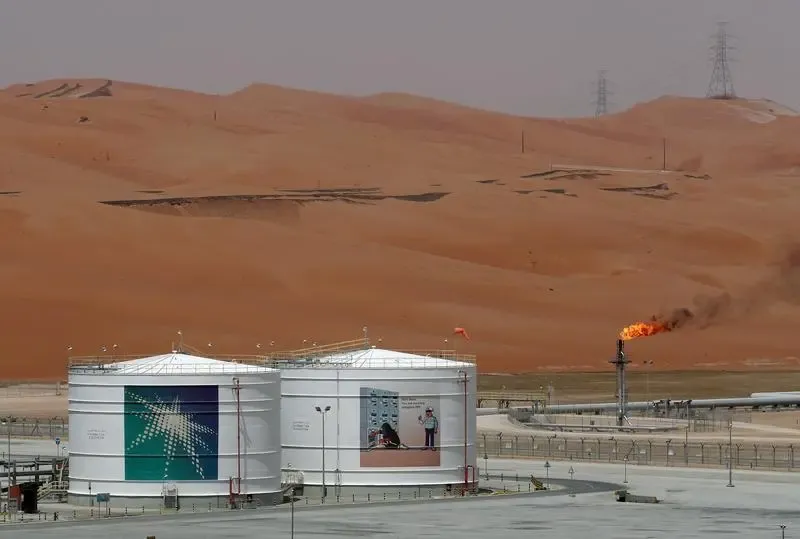
Saudi Arabia's crude oil production rose to 8 million barrels per day in September 2026, recording a 12.2% increase month-on-month, coinciding with Brent crude prices stabilizing at $103.5 per barrel at the end of the month.
Non-oil economy performance
The rise in oil production and crude prices came amid continued geopolitical tensions, with signs of improving conditions in the Kingdom's non-oil economy. The Saudi Purchasing Managers' Index (PMI) rose to 55.3 points in September, recording its highest reading since February, indicating an acceleration in non-oil private sector business activity. The construction index also remained in expansion territory at 54.4 points.
Consumer spending continued to support domestic demand, recording a 6.4% year-on-year increase in August to reach 142 billion riyals, while e-commerce spending jumped by 26%, highlighting the growing contribution of digital channels to consumption.
Financial and economic indicators
Despite the non-oil recovery, Saudi Arabia's real GDP fell by 4.7% year-on-year in the second quarter of 2026, mainly due to a 24.8% decline in oil activities, while non-oil activities and government services grew by 0.9% each.
Inflation rose slightly to 1.9% in September compared to 1.8% in August, driven by a 3.6% increase in housing and utility costs. Meanwhile, the national unemployment rate fell to 6.5% in the second quarter. Fiscal spending is expected to exceed initial estimates, with expenditures for 2026 estimated at about 1.435 trillion riyals, while revenues are estimated at 1.19 trillion riyals.
In the banking sector, credit growth reached 7% year-on-year in August, compared to deposit growth of 5.7%, while the average three-month Saudi Interbank Offered Rate (SAIBOR) was 5% in September.


