Written by: Fatma Younes
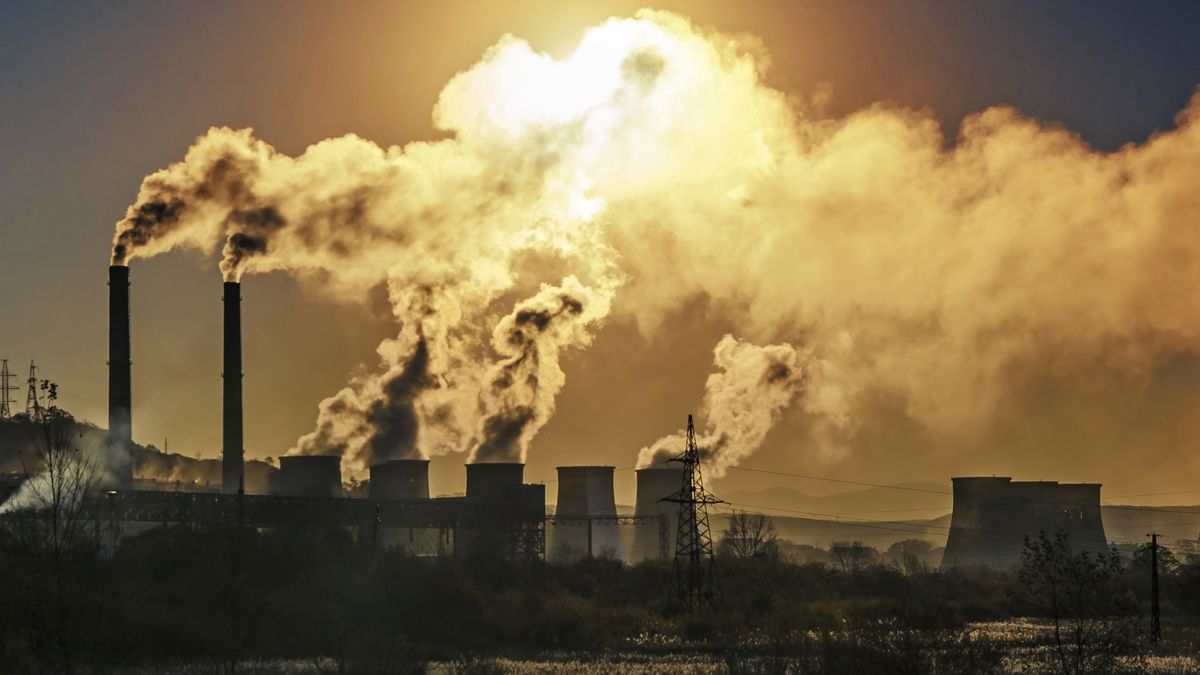
Carbon dioxide emissions are considered the primary cause of global warming resulting from human activities. These emissions primarily come from the burning of coal, oil, and gas, in addition to cement production processes and changes in land use such as deforestation.
Global Greenhouse Gas Emissions Trends
Global greenhouse gas emissions, measured in CO2 equivalent, recorded about 59 billion tons in 2019, representing a 12% increase from 2010 and 54% from 1990. The decade from 2010 to 2019 saw record figures with an annual average of about 56 billion tons, an increase of 9.1 billion tons over the previous decade (2000-2009).
2025 Emission Projections
Preliminary estimates for 2025 indicate that total human-caused emissions will reach approximately 42.2 billion tons of CO2, of which 38.1 billion tons result from fossil fuels. Looking at 2024 data, fossil fuel emissions were estimated at about 37.8 billion tons, while net emissions related to land-use change brought total human-caused emissions to 42.4 billion tons.
The Role of Natural Carbon Sinks
Land and oceans act as carbon sinks, absorbing a large portion of emissions annually. During the period between 2015 and 2024, estimates suggest that about 50% of human-caused emissions remained in the atmosphere, while the oceans absorbed about 29%, and terrestrial ecosystems absorbed about 21%. The oceans' absorption capacity contributes to slowing the increase in carbon concentration, but in return, it leads to increased ocean acidification, which affects marine ecosystems.
Emission Status in France
In France, regional CO2 emissions reached about 270 million tons in 2024. These emissions are expected to decrease in 2025 to reach about 264 million tons, a decline of 2.2%. Per capita emissions also saw a noticeable decrease, reaching about 3.8 tons in 2025 compared to 6.9 tons in 1990, reflecting a 45% decline in per capita emissions over 35 years.